Best Deals for East Java 4-Day Tour
21 November 2025
 Published on 23 January 2026
 1862x views


Traveling from Jakarta to Borobudur, Bromo, and Ijen sounds complex at first. The route crosses provinces, landscapes, and transport systems. With the right planning, this journey becomes a structured adventure rather than a logistical challenge.
This guide explains how travelers move efficiently from Jakarta through Central and East Java while maximizing time at Indonesia's most iconic landmarks. If you'd rather see what each day actually looks like first, read our day-by-day Borobudur, Bromo & Ijen itinerary, then come back here for the route. The whole trip can also be booked as one seamless Jakarta to Borobudur, Bromo & Ijen private tour.
These three destinations represent different layers of Indonesia's natural and cultural heritage. Borobudur reflects ancient spiritual architecture. Bromo showcases volcanic landscapes shaped by active geology. Ijen introduces rare natural phenomena through its blue fire and sulfur crater.
Combining them into one route creates a complete narrative of Java's diversity, similar to the experiences in Borobudur, Bromo, and Ijen on a 6-day adventure, where each location builds context for the next.
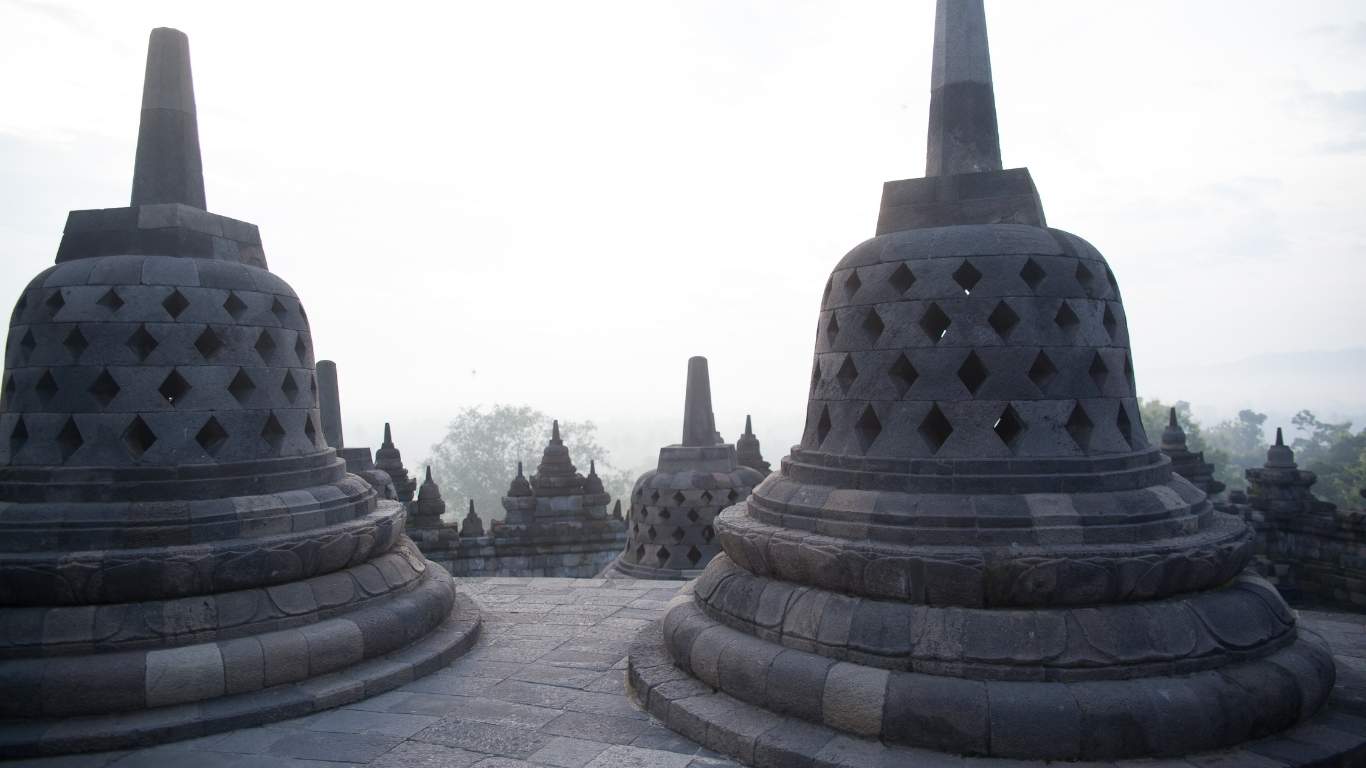
Borobudur sits in Central Java and dates back to the 9th century. Bromo lies inside a national park defined by volcanic plains. Ijen stands at the eastern edge of Java with active mining and crater lakes. Each destination offers a distinct experience that complements the others.
Before mapping the legs, here's the shape of the journey so you can picture the pace:
| Leg | Typical mode | Approx. time |
|---|---|---|
| Jakarta → Yogyakarta | Flight / train | ~1 hr (flight) · 7–8 hrs (train) |
| Yogyakarta → Borobudur | Road | ~1.5 hrs |
| Yogyakarta → Bromo highlands | Road (via Malang/Probolinggo) | ~8–10 hrs |
| Bromo → Kawah Ijen | Road | ~6–8 hrs |
| Ijen → Bali (Gilimanuk crossing) | Road + ferry | ~5–6 hrs |
Because the stops run west-to-east, the smart play is a one-way route that finishes in Bali instead of doubling back to Jakarta.
Reaching multiple destinations across Java requires understanding distances, travel times, and transportation connections. Most travelers follow a one-way route eastward to avoid backtracking. This strategy often appears in guides discussing the best ways to travel around East Java during 4 days.
The journey usually starts with a flight or train from Jakarta to Yogyakarta. Flights take around one hour while trains range between seven and eight hours. From Yogyakarta, Borobudur sits about ninety minutes away by road.
Private transfers remain the most efficient option due to early access schedules and limited public transport near the temple complex.
Travelers typically return to Yogyakarta or continue east toward Malang or Probolinggo. Trains offer overnight routes that reduce daytime fatigue. From these cities, travelers transfer to local vehicles or jeeps to access Bromo. This leg requires careful timing because Bromo sunrise access starts before dawn.
From Bromo, most routes continue toward Banyuwangi or Bondowoso. The journey takes between six and eight hours by road depending on traffic. Ijen's hiking access opens late at night for blue fire viewing, making rest planning essential.
Tour-based transfers simplify coordination across this final segment. Most travelers follow a one-way route from Jakarta toward East Java, which avoids backtracking and fits well with organized tour package options that handle transport and accommodation in sequence.
Multi-destination routes across Java demand local coordination and time accuracy. Jotuu Tour specializes in connecting long-distance routes without forcing travelers to manage separate bookings. Their itineraries follow realistic travel pacing rather than rushed schedules.
Local drivers and guides support language needs, timing adjustments, and route flexibility based on conditions. Travelers also benefit from fixed departure windows and structured overnight planning. This approach reduces missed connections and fatigue across consecutive travel days, exactly what the Jakarta to Borobudur, Bromo & Ijen private tour is built to handle. For a sense of how cost scales with route length and starting city, see our breakdown of East Java tour package price by departure city.
The best time to visit Borobudur, Bromo, and Ijen falls between May and October. Dry conditions improve visibility and reduce road disruptions. Early mornings remain cold at Bromo and Ijen, so layered clothing becomes necessary.
Food lovers should explore local dishes such as rawon in East Java and gudeg in Yogyakarta. Planning meals ahead helps maintain energy during long travel days. Carrying small cash amounts helps with local services near remote areas. Checking weather updates before each leg supports safer travel decisions.
Most travelers do it in five days one-way, which keeps the pace realistic across the long drives between Central and East Java and finishes in Bali without backtracking.
Flying saves time at about one hour versus seven to eight by train. Overnight trains, however, double as accommodation and reduce daytime fatigue before the early volcano starts.
No. A one-way organized tour sequences every transfer, overnight, and sunrise start for you, which is why most visitors choose a package for this route rather than piecing it together.
Let's explore Bromo and Ijen together. Traveling from Jakarta to Borobudur, Bromo, and Ijen becomes manageable with structured routing and local insight — understanding transport links, travel timing, and destination access creates a smoother experience across Java.
For travelers who want a coordinated journey without the logistical stress, the Jakarta to Borobudur, Bromo & Ijen private tour offers a balanced way to explore Indonesia's cultural and natural highlights — and once you've locked in the route, revisit the day-by-day itinerary to see exactly what each morning holds.


